Why Do Hardwood Floors Gap in Winter?
Short answer: dry winter air. When Metro Detroit furnaces start running in October, indoor humidity drops, each hardwood board gives up moisture and shrinks across its width, and that shrinkage shows up as thin gaps between the boards. Hairline gaps that open in winter and close again by summer are normal. Gaps that stay open all year, or come with cupped, loose or soft boards, are worth a closer look.
Why Hardwood Floors Gap When the Heat Comes On
Wood is never completely dry. A solid oak board takes on moisture from the air in humid weather and gives it back when the air dries out, and it moves mostly across its width, not along its length. One narrow strip of oak only shrinks a hair, but a room has dozens of strips side by side, so the movement adds up and collects in the seams.
Heating is what dries the air. Cold outdoor air holds very little moisture, and once it is warmed inside the house its relative humidity falls a long way. Most hardwood makers ask for indoor humidity of roughly 35 to 55 percent, and a heated Michigan house in January often sits well below that unless something is adding moisture back.
Why the Question Comes Up Now in Metro Detroit
The heating season is starting. The Detroit News reported on October 4 that the northern edge of Metro Detroit, in northern Oakland, Macomb and Washtenaw counties, could see patchy frost early Tuesday, October 6, while most of the area stays above freezing for another week or two. The average first freeze in Detroit falls in late October.
Once nights settle into the 30s, thermostats go up and furnaces run for hours a day. The first gaps usually show within a few weeks, are widest in January and February, and close up again from late spring as the air turns humid. That pattern is the same in a bungalow in Detroit or Dearborn, a ranch in Livonia or Westland, or a newer build in Canton.
Normal Seasonal Gaps or a Problem?
Use this to sort it out:
- Normal: thin gaps, about the thickness of a business card to a dime, spread fairly evenly across the room, that open in winter and close again in summer.
- Worth a look: a few wide gaps in one area, gaps that stay open through July and August, or boards that rock or squeak when you step on them.
- Worth a call: cupping or crowning, where board edges sit higher or lower than the middle, gaps that appeared after a leak or a flooded basement, or boards near a heat register or above the furnace that have pulled far apart from their neighbors.
A simple test: note which seams are open in January and look at them again in July. If they close, the floor is just moving with the seasons.
Which Floors Gap the Most
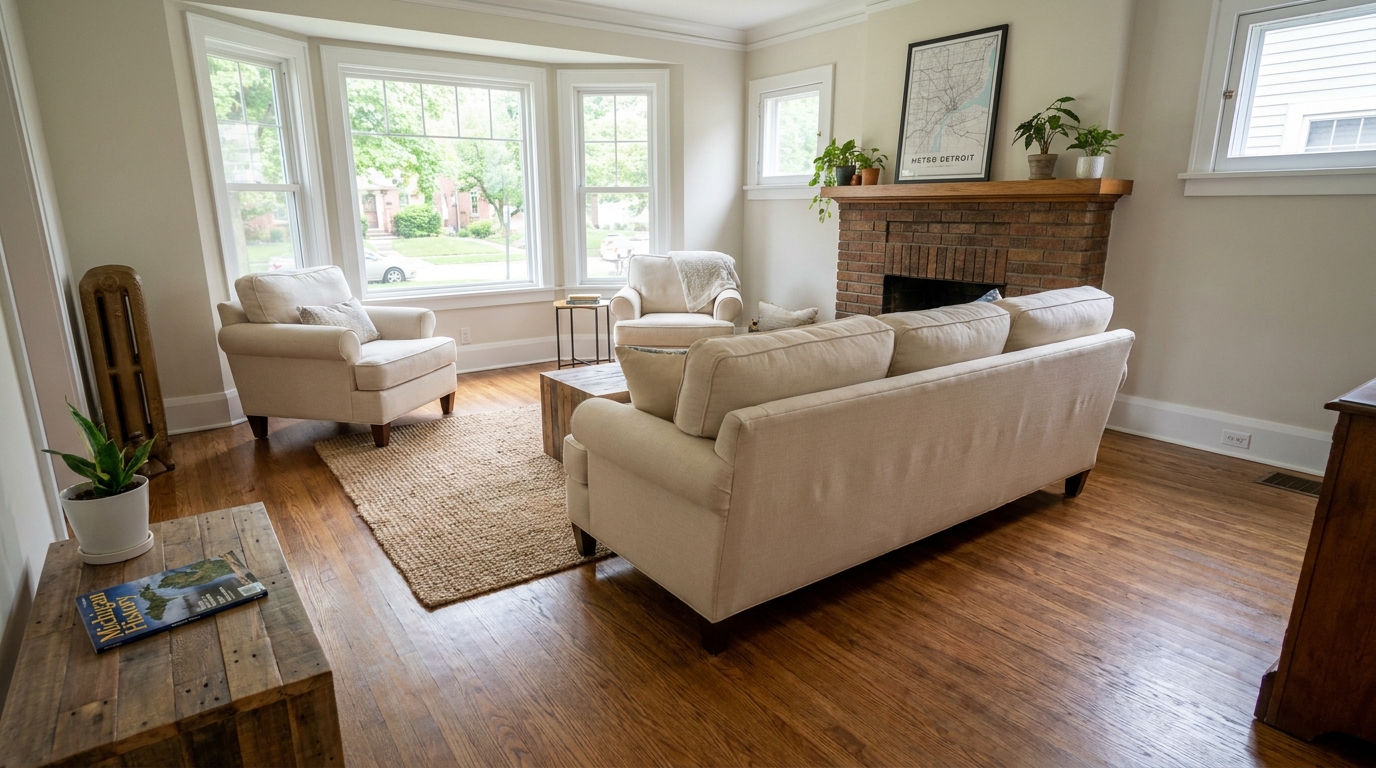
- Solid strip oak. The floor in many older homes across Detroit, Dearborn and the inner suburbs. Each strip is narrow, so the gaps stay thin, but there are many of them.
- Wide-plank solid hardwood. Fewer seams, so each board moves more and the gaps are easier to see. Wide planks are also the most likely to cup in a humid summer.
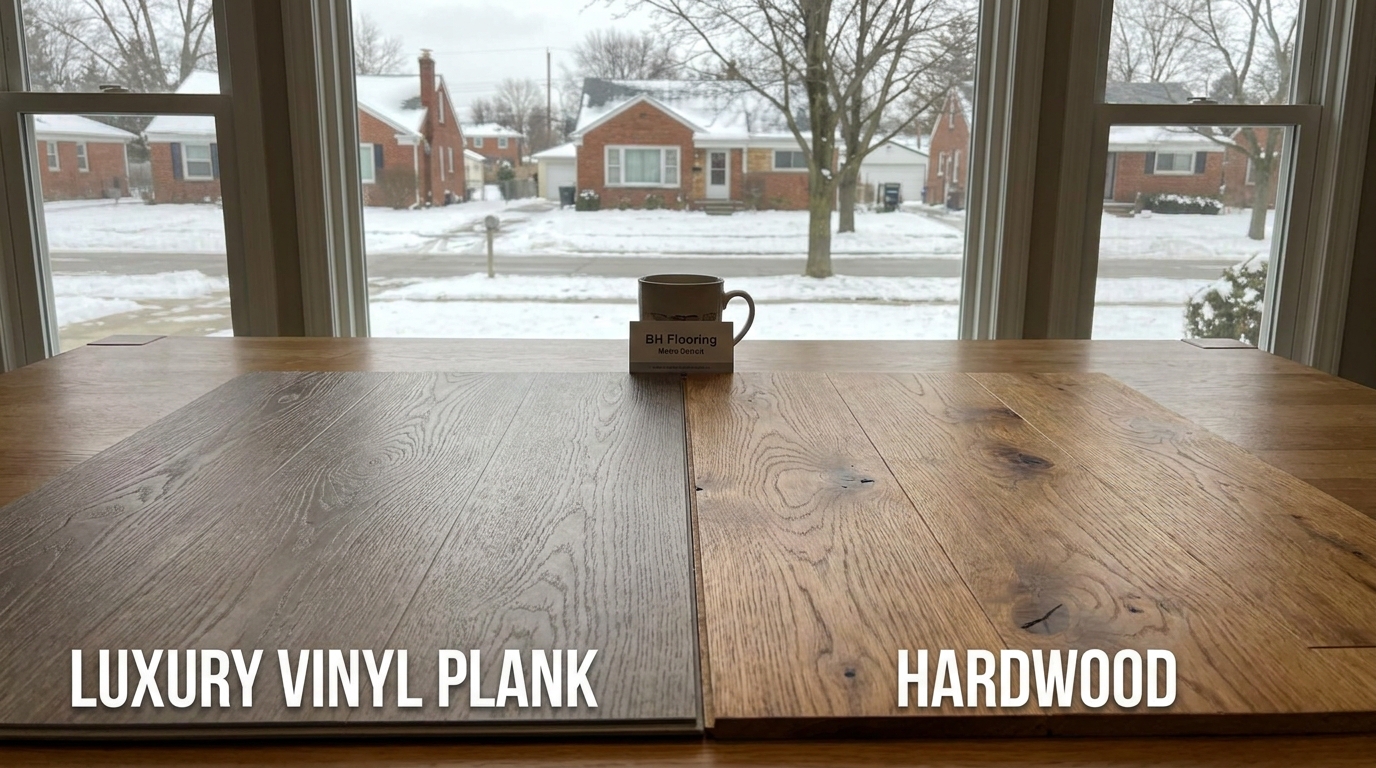
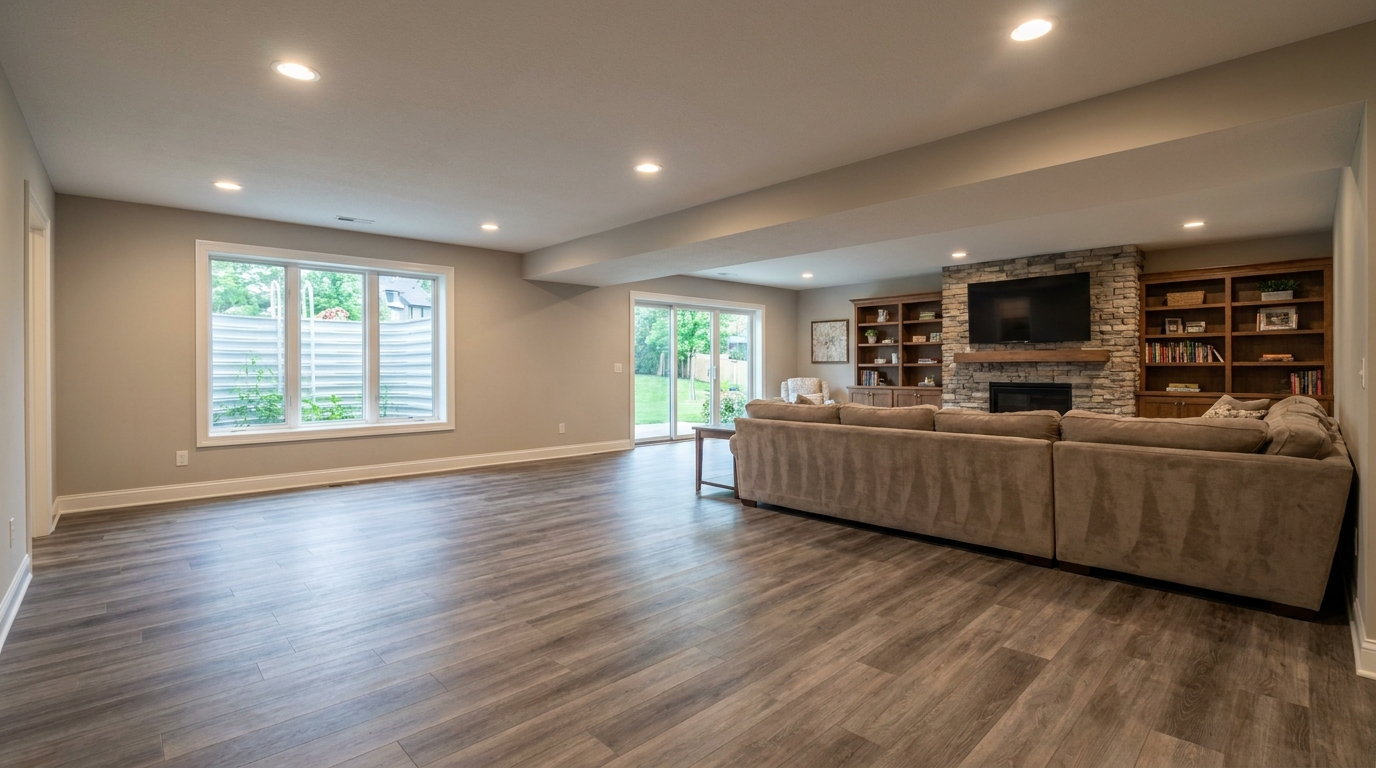
- Engineered hardwood. A real wood top layer on a cross-layered core. It moves far less than solid wood, which is why it is often chosen over a concrete slab or in a basement.
- Luxury vinyl plank. It does not take on moisture the way wood does, so dry winter air does not open its seams. It can still move with big temperature swings, for example in an unheated three-season room.
What You Can Do This Winter
- Measure first. A small digital hygrometer shows the humidity in the room. Aim for the range your flooring maker lists, usually around 35 to 55 percent.
- Add moisture back. A whole-house humidifier on the furnace, or a room humidifier in the rooms with the most wood, keeps the boards closer to their summer size. Watch the windows: heavy condensation means the humidity is too high.
- Do not fill seasonal gaps. Wood filler or caulk pushed into a winter gap gets squeezed out when the boards swell back in summer, and it can crush the board edges.
- Keep heat off the floor. Do not point space heaters at the floor, and keep rugs and furniture from blocking floor registers so warm air is not trapped against one patch of boards.
- Clean the seams gently. Vacuum with a soft brush head rather than a wet mop. Standing water gets into open seams and can swell the board edges.
When to Call a Flooring Pro
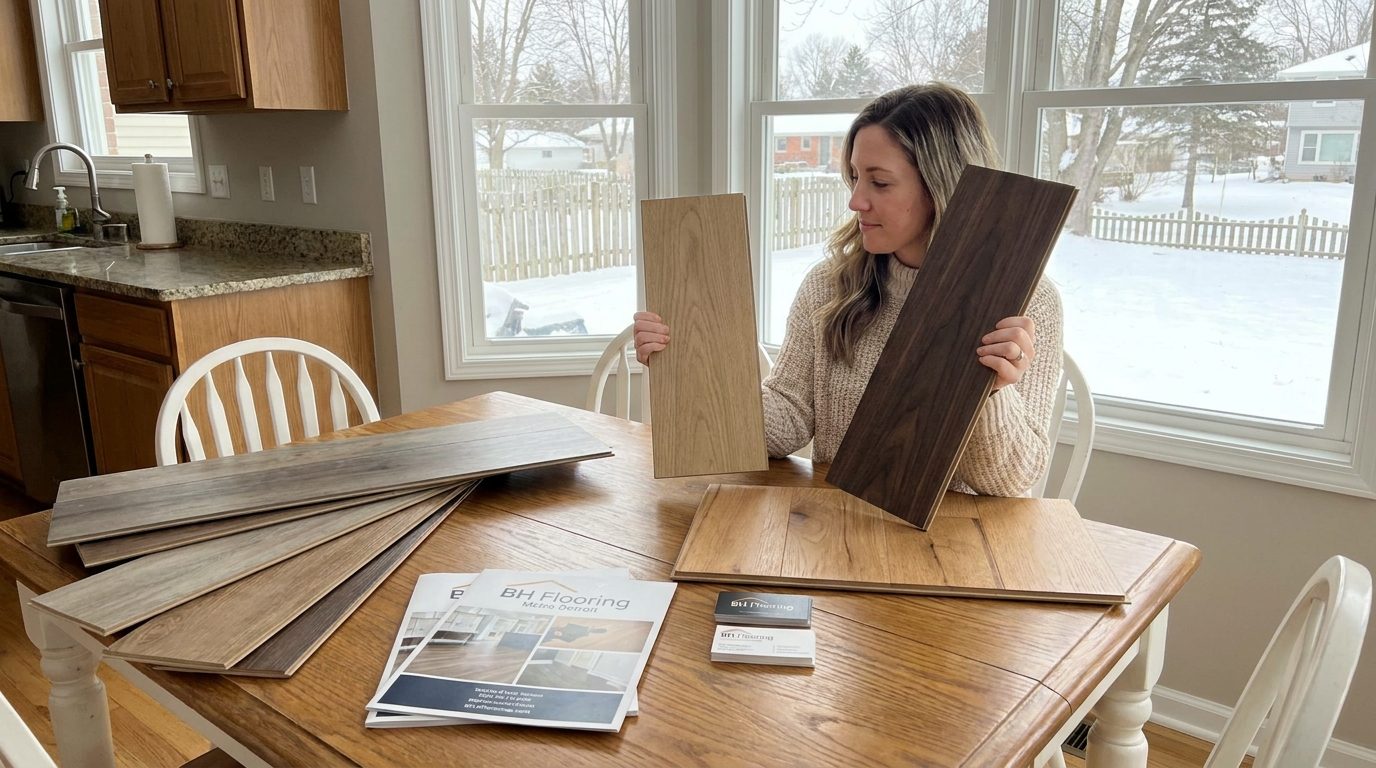
If gaps stay open after the humid months, get wider every winter, or come with cupping, loose boards or soft spots, the cause is usually more than dry air: a subfloor that moves, boards that were not acclimated before they went down, or moisture coming up from a basement or crawl space. A flooring crew can take moisture readings, find what is moving and talk you through the options, from re-laying boards to refinishing or choosing a floor that suits the room better.
See our hardwood flooring page for the hardwood work we do across Metro Detroit, and our guide to hardwood refinishing if the boards are sound but the finish is worn.
Gaps that do not close by summer?
Call (313) 236-4558 Sunday to Thursday from 9:00 AM to 5:00 PM or Friday from 9:00 AM to 12:00 PM, or send us a message and we will call you back. We are closed Saturdays.