How to Remove Carpet Glue From a Concrete Basement Floor
Soften the glue with warm water or a citrus-based adhesive remover, scrape it off with a long-handled floor scraper, then grind away the thin film that is left. Before you start, look at the color of the glue: yellow or tan carpet adhesive is a scraping job, but hard black glue in an older Metro Detroit basement can contain asbestos and should be tested before anyone scrapes, sands or grinds it.
The Short Answer
Most glue left on a basement slab after the carpet comes up is a latex or multipurpose carpet adhesive. It softens with water, and it comes up with a sharp scraper and some patience:
- Clear the floor. Pull the carpet, the pad and the tack strips around the walls, then sweep and vacuum so you can see the whole slab.
- Wet one section at a time. Work in an area of about four feet by four feet. Soak the glue with warm water, or use a citrus-based adhesive remover and follow its label for dwell time and ventilation.
- Scrape at a low angle. A long-handled floor scraper does most of the work. Change the blade often, because a dull blade skates over the glue instead of lifting it.
- Pick up the residue while it is soft. Wipe the loosened glue up with rags or a wet vac before it dries and sticks again.
- Grind off the film, but only if it is safe. The thin layer left behind usually needs a floor buffer with an abrasive pad, or a concrete grinder with a vacuum attached. Never sand or grind black glue until it has been tested.
Why So Many Metro Detroit Basements Need This Now
The severe storms of September 2 and 3 brought torrential rain, large hail and localized flash flooding across Metro Detroit, and left almost 105,000 DTE customers without power by midday on Thursday, September 3, according to WDIV Local 4. When the power goes out, the sump pump stops, and a finished basement in Detroit, Dearborn, Livonia, Westland or Taylor can take on water within hours.
Wet carpet and pad over concrete rarely dry out well, so in the weeks since, many of those basements have had their carpet torn out. What is left is a slab covered in glue, and the question of what to put down next. With the holidays coming, this is when a lot of families want the basement back.
First, Check the Color of the Glue
Detroit has some of the oldest housing in the country, and many basements around here have had more than one floor over the years. What you find under the carpet tells you which job you have:
- Yellow, tan or off-white, and a little tacky. This is usually a modern latex carpet adhesive. It is the water-and-scraper job described above.
- Hard, black and shiny, sometimes in a swirl pattern. This is often an older cutback adhesive, the kind laid under asphalt and vinyl floor tiles in homes built before the 1980s. Some of it contains asbestos. Do not scrape it dry, sand it, grind it or heat it until a sample has been tested.
- Old 9-inch square tiles under the carpet. Tiles of that size from that era are a common place to find asbestos, in the tile or in the glue beneath it. Leave them in place until they are tested.
Testing means sending a small sample to an accredited lab. If it comes back positive, do not disturb it yourself. A qualified asbestos abatement contractor can remove it, and in some basements the better answer is to leave the old layer in place and cover it with the new floor. Ask the abatement contractor which applies to yours.
Does All the Glue Have to Come Off?
Not always. It depends on what goes down next:
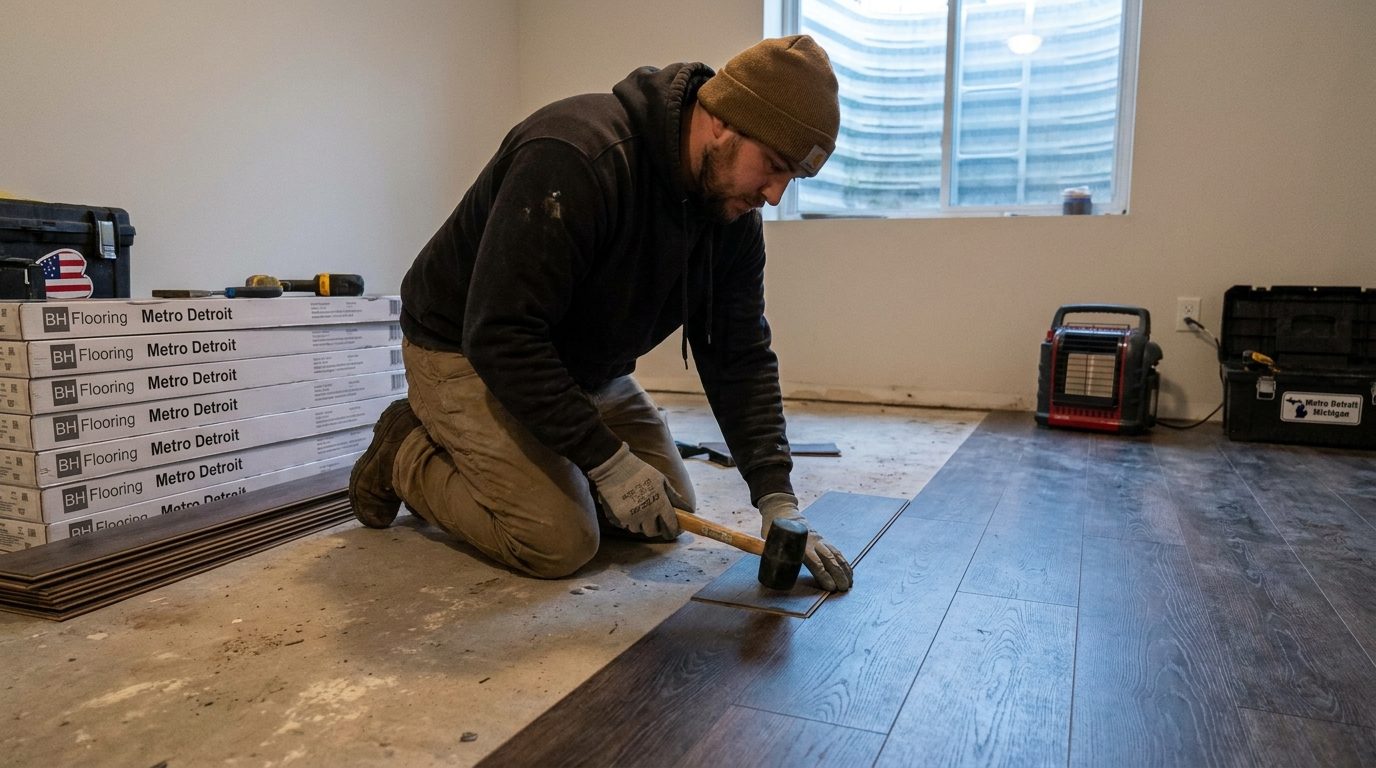
- Floating LVP or laminate. A floating floor is not glued to the slab, so it needs a flat, clean and dry surface more than a spotless one. Scrape off the ridges and lumps so the planks sit flat, and use the underlayment or vapor barrier the maker calls for.
- Glue-down vinyl or tile. New adhesive or thinset has to bond to the concrete. Old glue in the way can stop that bond or react with the new adhesive, so plan on getting down to bare concrete.
- Carpet again. New carpet over pad is the most forgiving, but after a flood many homeowners choose a floor that handles water better.
Whatever you choose, read the flooring maker’s instructions for concrete before you start. They say how flat the slab must be and what it must be free of, and following them is often a condition of the warranty.
Before New Flooring Goes Down After a Flood
- Let the slab dry. Concrete holds water long after the surface looks dry. Run a dehumidifier and give it time.
- Check for moisture. Tape a square of clear plastic sheet tightly to the floor and leave it for a day or two. Droplets under the plastic, or a darker patch of concrete, mean the slab is still too wet for new flooring.
- Fix the cause first. If the water came in because the sump pump lost power, look at a battery backup before you finish the floor again. If it came up through the floor drain, ask a plumber about a backwater valve.
- Fill cracks and low spots. Patch the cracks and use a self-leveling compound in the low spots so the new floor sits flat and does not flex.
When to Call a Flooring Crew
Scraping glue off one small room is a weekend job. It is worth a call when the basement is large, when the glue is black or you find old tiles, when the slab is cracked or uneven, or when you want the same crew to prepare the concrete and install the new floor. See our water damage floor restoration service, and for choosing what goes down next, our guide to basement flooring in Metro Detroit.
The work depends on the size of the basement, the type of glue, and how flat and dry the slab is. Call (313) 236-4558 for a price on your job, Sunday to Thursday from 9:00 AM to 5:00 PM and Friday from 9:00 AM to 12:00 PM, or send us a message through our contact form.
Basement floor ready for a fresh start?
We work Sunday to Thursday 9:00 AM to 5:00 PM and Friday 9:00 AM to 12:00 PM, closed Saturdays. Call us or send us a message to get started.