
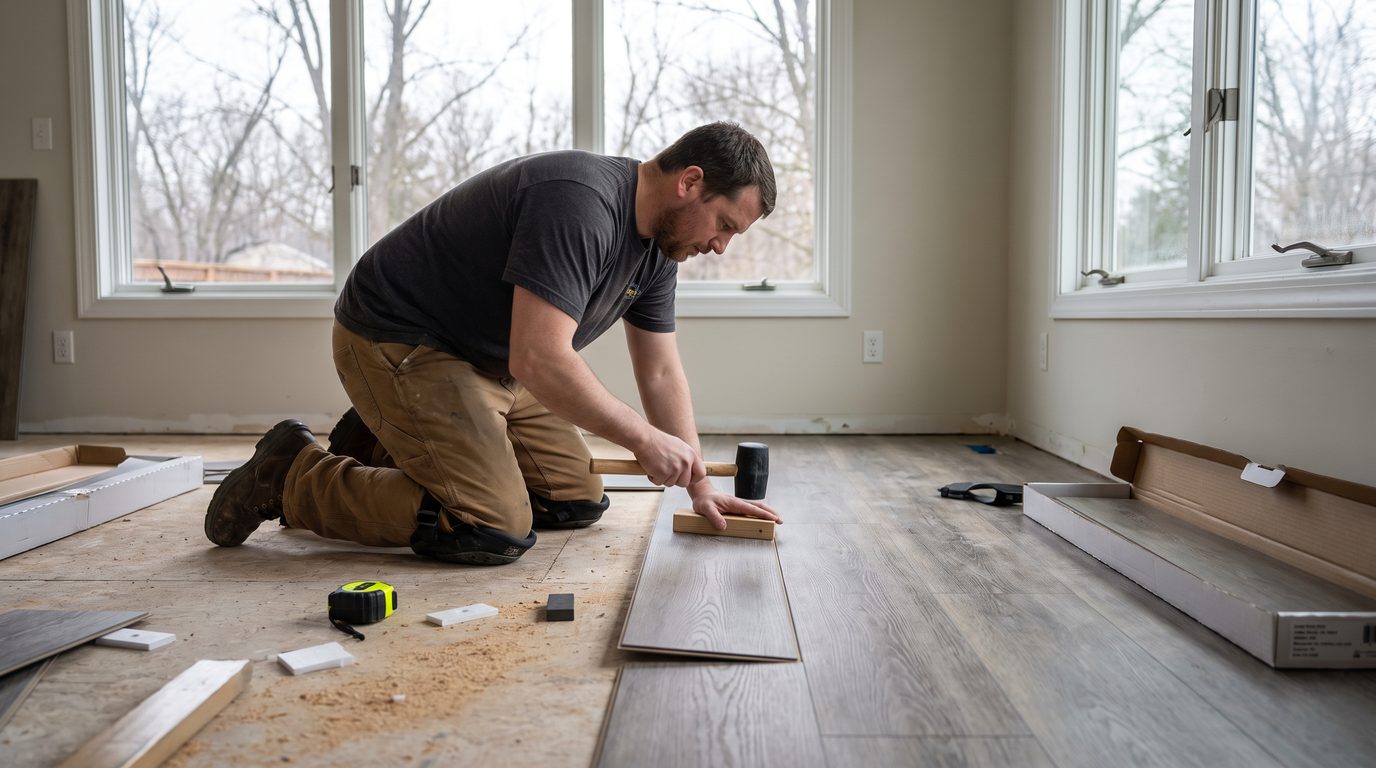
How Much Does LVP Flooring Installation Cost?
It depends on the room more than on the plank. The cost to install LVP flooring is set by the square footage, the plank you choose and, above all, the condition of the floor underneath, so two rooms of the same size can be priced very differently. Here is what moves the number in Metro Detroit homes, and how to get a real price for yours.
The Short Answer
There is no single price for LVP installation, and we do not publish one, because a number given without seeing the room is a guess. Every LVP price is made of two parts: the material (the plank, the underlayment, the trim and the transition pieces) and the labor (everything from taking out the old floor to setting the last piece of quarter round). Online averages blend new construction with hundred-year-old houses and open living rooms with tight bathrooms, which is why the ranges you see are so wide. What decides your number is the list below.
Seven Things That Set the Price
- Square footage and layout. More floor means more material and more time. But a small, chopped-up space with closets, a hallway and door jambs takes more cuts per square foot than one open room.
- The plank you choose. Thickness, the wear layer on top, a rigid or flexible core and an attached pad all change the material cost. A thicker wear layer costs more and holds up longer under pets, kids and rolling chairs.
- Floating or glue-down. Most homes get click-together planks that float over the subfloor. Glue-down LVP needs a flatter, cleaner surface and adhesive, so the labor is higher. It is more common in commercial spaces.
- Removing the old floor. Carpet comes up fast. Glued sheet vinyl and ceramic tile take much longer. Ask whether tear-out and haul-away are part of the price.
- Subfloor prep. This is the biggest swing on most jobs. LVP is thin and shows every dip and ridge under it, so low spots are filled, high spots are ground down and loose plywood is fastened before a plank goes in.
- Stairs, trim and transitions. Stairs are cut and fitted one step at a time. Baseboards or quarter round, trimmed door casings and the transition strips between rooms all add time.
- Furniture and appliances. Someone has to move the sofa, the beds, the refrigerator and the stove, and put them back. Find out who.
For more on the removal step, see do flooring installers remove old flooring.
What Metro Detroit Homes Add
Local houses bring their own conditions, and they are the reason a figure from a national calculator rarely matches a real job here.
- Basement slabs. Many homes in Detroit, Dearborn, Livonia, Westland, Canton and Taylor have a finished or half-finished basement on a concrete slab. Concrete holds moisture, so the slab should be tested before LVP goes over it, and cracks or low spots around the floor drain need filling first.
- Old carpet glue and paint. A slab that had glued carpet or a painted finish needs to be scraped or covered before a new floor will sit flat.
- Layered floors in older houses. Homes built before 1980 often have two or three floors stacked on each other. Old 9-inch tiles and the black glue under them should be tested by an accredited lab before anyone disturbs them.
- Plank subfloors. Older main floors were often built on wide boards, not plywood. They usually need a layer of underlayment plywood so the seams do not show through the vinyl.
Our guides on basement flooring in Metro Detroit and how to remove carpet glue from concrete go deeper on slabs.
Why People Are Asking Now
Thanksgiving falls on November 26 this year, and the weeks before it are the busiest of the fall for flooring. LVP is a common pick for a pre-holiday project because it needs no sanding, staining or cure time, so a room is back in use soon after the last plank clicks in. The planks still have to be measured for, ordered and delivered, and most manufacturers ask for the cartons to sit in the house before installation. Asking about cost in October leaves room for all of that.
How to Compare Two Prices
Two prices for the same room can be far apart and both be honest, because they cover different work. Before you compare the totals, check that each one answers these:
- Is it the same plank? Compare the thickness, the wear layer and the core, not only the color.
- What prep is included? Ask how leveling, patching and moisture testing are handled, and what happens if the subfloor is worse than expected once the old floor is up.
- Is removal in or out? Tear-out, haul-away and furniture moving should each be written down.
- What about trim and stairs? Baseboards, quarter round, transitions and each stair should appear in the scope.
- Who measured? A price from a measurement taken in the room is worth more than one built from a listing or a guess.
Our checklist for hiring a flooring contractor in Michigan covers the rest of a written scope.
Ways to Keep the Cost Down
- Clear the rooms yourself. Empty the closets and move small furniture before the crew arrives.
- Group the rooms. Doing connected rooms in one visit means one setup and fewer transition strips.
- Choose a floating plank. Where the subfloor allows it, click-together LVP installs faster than glue-down.
- Do not cut the prep. Skipping leveling or moisture testing is the usual reason a vinyl floor fails early, and fixing it later costs more than doing it once.
Get a Price for Your Floor
We install luxury vinyl flooring across Metro Detroit. The price depends on the size and shape of the rooms, the plank you pick, what is coming out and what is under it. Call (313) 236-4558 for a price on your job, Sunday to Thursday from 9:00 AM to 5:00 PM and Friday from 9:00 AM to 12:00 PM, or send us a message through our contact form.
Planning LVP before the holidays?
We work Sunday to Thursday 9:00 AM to 5:00 PM and Friday 9:00 AM to 12:00 PM, closed Saturdays. Call us or send us a message to get started.


